Every human is enough of a dancer just as they are. However, if you want a career as a professional dancer, it requires a lot of training and practice. Developing consistent good habits is vital to building a solid foundation of physical and mental support for yourself as you grow.
But what are good habits for dancers?
Some habits may help us thrive, while others end up holding us back. Your habits will ideally reflect your goals as a dancer. Take some time to reflect on your current dance goals and how you plan to reach goals.
For example, if your goal is to improve flexibility, your goals include stretching and conditioning for a specific amount of time every week. If you want to be more mindful in your dancing, you might add goals for how often to journal about your experiences.
Once you know your goals, you’ll know which habits can help you get there. Here is a list of dance-related habits to get you started while you brainstorm your own.
Journaling
Practice Technique
Stretching
Conditioning
Drink Water
Eat Healthily
Did we miss anything? Which habits will you add to your list?
Improvisation in dance is usually referring to spontaneous or semi-structured movements. Rather than learning choreography as a specific sequence of known steps to match key points in the music, the moves are completely random or prompted by a simple word or phrase.
With improvisation in dance, the goal is not so much to be interesting but to be interested. It is more about presence than performance. The number of steps a dancer knows has no relation to their ability to create movement and dance on the spot when it comes down to improvisation skills. Dancers can learn new steps, but improvisation is an experience in presence.
In theory, improvisation is simple. Make up the movement as you go along. In practice, however, many dancers find it hard to make things up on the spot and stay present at the same time.
A great way to incorporate more presence into your dance practice is to play improvisation prompt games. If you are playing with a group of dancers, you can take the responsibility to call out a movement dynamic, color, or phrase, and dancers use that to inspire their movement.
If you are working alone, you can still provide yourself with a sense of spontaneity, but it might take more planning. For example, you can create a list of prompts to pull from, or even write out prompts on slips of paper and pull them out of a hat.
One benefit of using prompts in improvisation is that it removes the mental work of recollection and creates more space for presence.
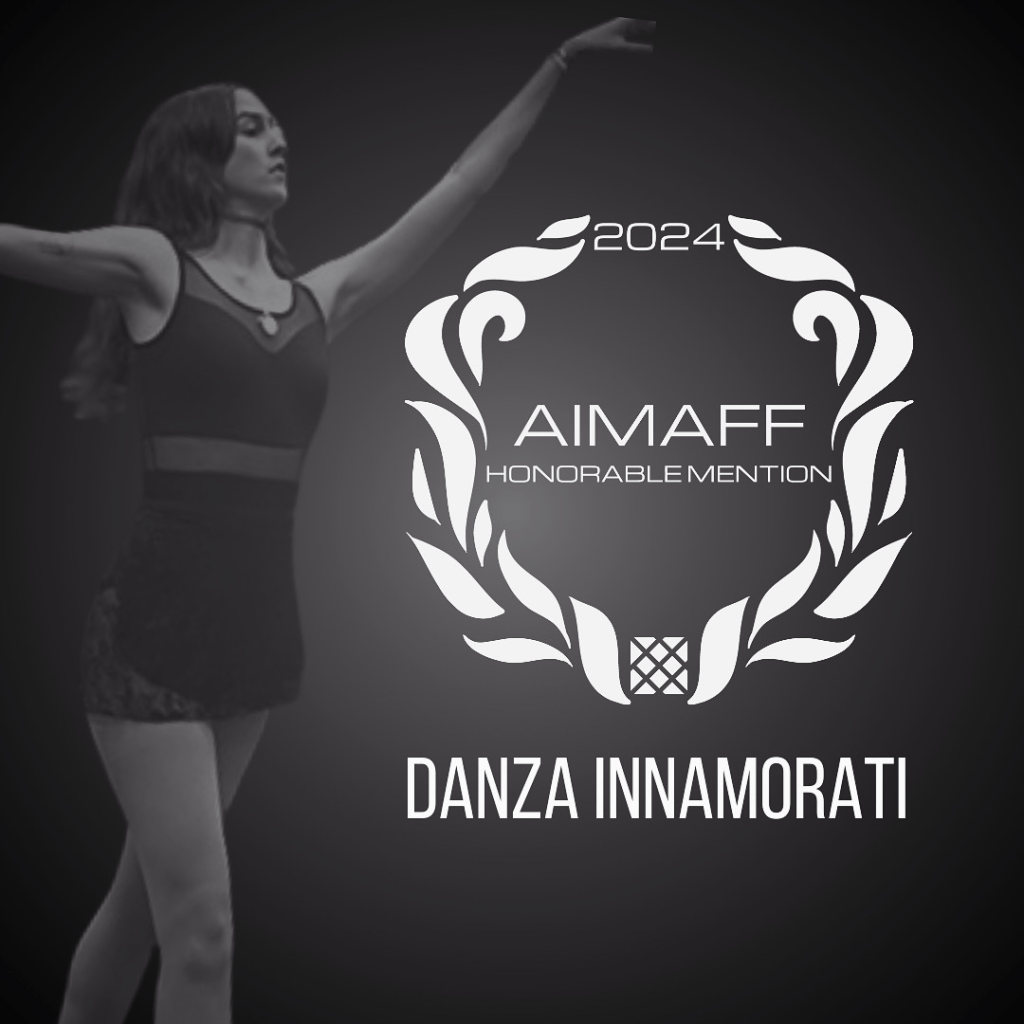
We are thrilled to announce that our short dance film, Danza Innamorati, has received an Honorable Mention at the Athens International Monthly Art Film Festival!
This recognition is a celebration of the incredible talent and dedication of our team, and it reinforces our commitment to creating meaningful opportunities for artists to shine.
Thank you to all who have supported this project—we couldn’t have done it without you! Stay tuned for more updates and opportunities!
Our short dance film Danza Innamorati has been selected for screening in the Los Angeles Lift-Off Film Festival! Thank you to everyone who has supported us on our film festival journey. Stay tuned to learn more about upcoming events!
Staying consistent with at-home dance practice can be a challenge. Not only is there no teacher present to guide and prompt your steps, but there is also nobody checking to see what is right or wrong with those steps.
While practicing dance at home can be a challenge, it is not impossible, and I have a few tips that can help make it easier to develop your routine. For the most part, I will structure my at-home practice as if it were an in-person class, but I can tailor the exercises to meet my needs for that day.
You can join me in using this repeatable recipe for every dance practice session:
Warmup
Technique practice
Choreography or Improv
Stretch
Log my notes
One reason I like having a standard list to turn to is that I have a reference of options to choose from. There may be days when I only have 20 minutes to practice, or may only be practicing for the sake of running through choreography. There have been many times when I just jump in to practice and do the thing, but I’ve learned that on the fly means I would be leaving off some of the important parts.
Warmup
Warming up is one of the most important parts of your dance practice. With a proper warmup for dance practice, you will be less likely to experience injury and soreness. An ideal warmup includes moving all parts of the body, and light stretching with a focus on preparing for the technique and choreography for the day.
Technique practice
Practicing techniques may look different depending on which style of dance you are working on. For ballet, for example, technique practice may look like a full barre or a series of targeted barre drills. If you are a ballroom dancer, you may take to the bar or wall to practice the feeling of resistance you may have with a partner. When it comes to practicing dance techniques on your own without a dance teacher, it can help to focus on repeating and solidifying what you have already learned, rather than trying to get ahead.
Choosing which technique to focus on will relate to either what you’re working on in class, personal goals you say, or even both.
Choreography or Improv
You may not always have a routine or choreography to practice, depending on your dance goals. Choreography run-throughs of whatever I may be working on at the time, and if not, I will throw some improv into the mix. The reason for this is that mentally, practicing technique and drills translates to dance moves.
Stretch
I already mentioned warming up as a necessary part of a dance practice session. Stretching is also important. While I do include stretching as a part of the warmup, I also like to add additional stretching after I have been moving. This also makes for a great cool-down after practice or class.
Log your dance notes
At the end of the practice session, I log my notes into my dance diary. This allows me to reflect on any challenges, or celebrate successes, and I can also see how consistent I am in showing up.
While each dance practice session will differ in the specific tasks and details, keeping a broad outline of what to include in your practice can help with the planning.
This pool is open to all artists in and around Orange County, California. If you are not local to this area, please stay tuned for virtual opportunities.
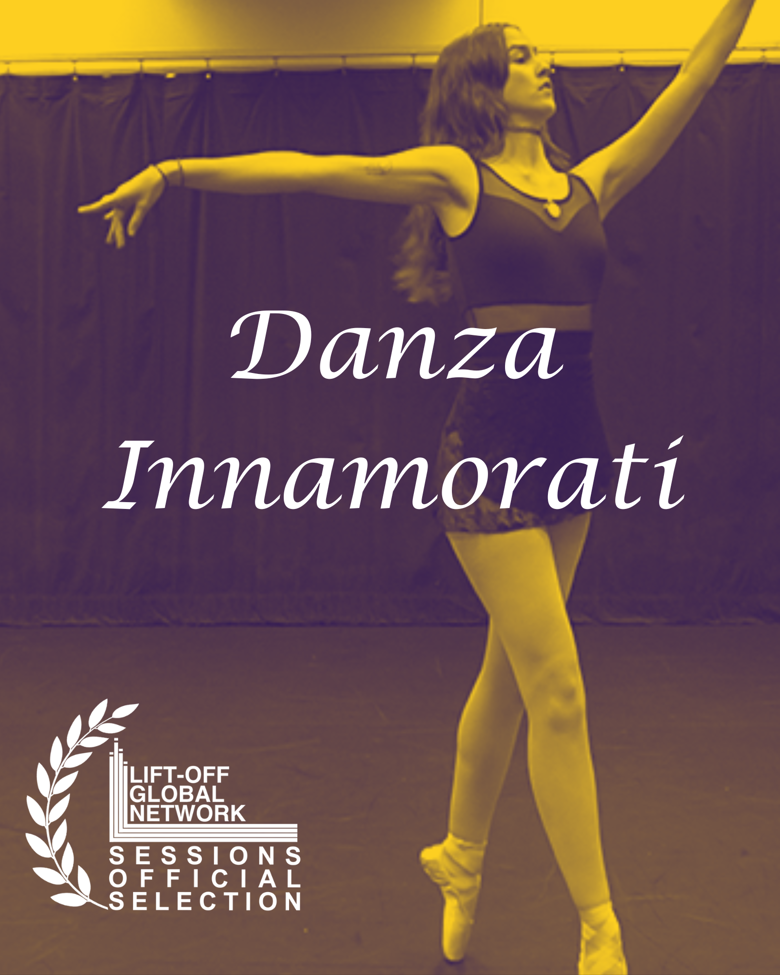
We are excited to announce that our short dance film, Danza Innamorati has been selected to be screened in the Lift-off Sessions July 2024, a monthly online showcase for indie shorts and features presented by the Lift-off Global Network.
More info on how to watch and support coming soon!
Dancing is just as much of a mental sport as it is a physical one. It takes courage and confidence for anyone to attempt a step first, and self-doubt is a common enemy for many. This doubt usually comes from my feeling that my dancing might not fit in with professional expectations. One practice I use to combat this perpetual self-doubt is reflexivity.
In social science, reflexivity refers to a process of questioning and reflecting on cultural norms. While there may be cultural norms in the dance world, we are all individual dancers. The benefit of incorporating regular reflection into your dance practice is that you can notice and understand which thoughts or stories may be holding you back from dancing confidently. When I am consistent with my reflecting practice, I feel much more accepting of myself as a unique dancer and more respectful of the history and tradition we are all a part of, even in our uniqueness.
Planning and journaling are two of the simplest ways to practice reflexivity. You’ll just need a place to put your thoughts. Your reflection space may be a blank notebook, digital notepad, post-its, or whatever media you desire for your archive. There are also many customized options made by dancers like myself for tracking and reflecting on your dance practice. You may need to try a few different journaling styles before you find what works for you, which is just another chance to reflect! I use a combination of written logs and journaling in my dance practice.
Every dancer has their own unique body and soul, and a reflexive approach to dancing allows you to be fluid in developing your dance skills to your personal needs. As an anthropologist, I think it is essential for the people experiencing cultural moments to reflect on them. Your journals and dance logs will become part of the collective memory of dance. There are so many ways we can preserve dance for the future, and leaving an archive of personal reflections is one of them.
Looking for more? Check out our Year of Dance Journal Prompts. This dance reflection resource includes 12 prompts to guide dancers through a year of dance reflection.
You have probably heard it said that dance is a great way to stay in shape and feel good, but when we are aiming for professional-level training, some of those feel-good experiences may turn sour.
These mindful practices are nothing new for dancers. In fact, we use them regularly during classes, but to bring attention and to notice allows for a more functional tool.
I wrote this post to share a few ways you can tap into mindful practices without needing to add any extra training to your schedule.
Breath
We all need to breathe in order to stay alive. But how often do you think about your breath? How often do you notice the power?
Try this:
When you find yourself becoming fatigued during an exercise class, try to focus on slowing your exhale while channeling the energy into where it feels rough.
Tapping Check-in
How often have you been physically in a dance class but mentally someplace else? Or how about this one, you are present in the class and thinking about the exercises, but also criticizing your own dancing while you are practicing.
Try this:
When you notice yourself in a place of overthinking, give yourself a small double tap someplace on your body. You can link this tap with a message to come back.
Eyes Closed
Have you ever found that you are able to perform just fine in a dance class, but once you get home, you can’t remember any of the combinations or exercises? It’s likely you don’t actually know what you’re doing in the class, and you are watching others and relying on their presence.
The good news is that noticing what you don’t know is actually a mindfulness practice.
And even better news is you don’t have to wait until you go home to realize that you have forgotten a portion of the combination. You can find those gaps during class and take action to fill in the gaps before you get home so you have something more solid to anchor your practice.
Try this:
When learning a new combination, take a moment to close your eyes and visualize the movement in your mind. It’s likely you won’t get through the entire combination on the first try, but you will find the blank spots.
These are a few ways to add more mindfulness to your dance practice. Try them out during your next dance class, and remember to have fun with them!





 People Play Dance Theatre