People Play Dance Theatre invites movers, dancers, and performance makers to submit short works for Playspaces, a virtual variety show.
We’re seeking original movement-based works created and filmed in non-traditional spaces. This could be a hotel room, a stairwell, a rooftop, a garden, a parking lot. For this production, the location is as much a part of the piece as the performer.
After the premiere: The full program will remain available for replay.Submission Guidelines
Who Can Apply:
Dancers, movers, physical theater artists, interdisciplinary performers. Individual and group performances will be considered. Please submit a separate form for each submission.
What We’re Looking For:
Original works filmed in non-traditional spaces Strong use of movement and location Clarity of concept and creative camera framing
Technical Specs:
Video format: MP4 or MOV, 1080p minimum
Landscape orientation
Sound: Original score, royalty-free, or live natural sound preferred.
Reflection is a powerful tool for growth, especially in dance. Reflecting on your experiences can deepen your understanding of the skills, techniques, and creativity explored in the dance studio. It’s an opportunity to celebrate your progress, acknowledge challenges, and consider how to use what you’ve learned moving forward.
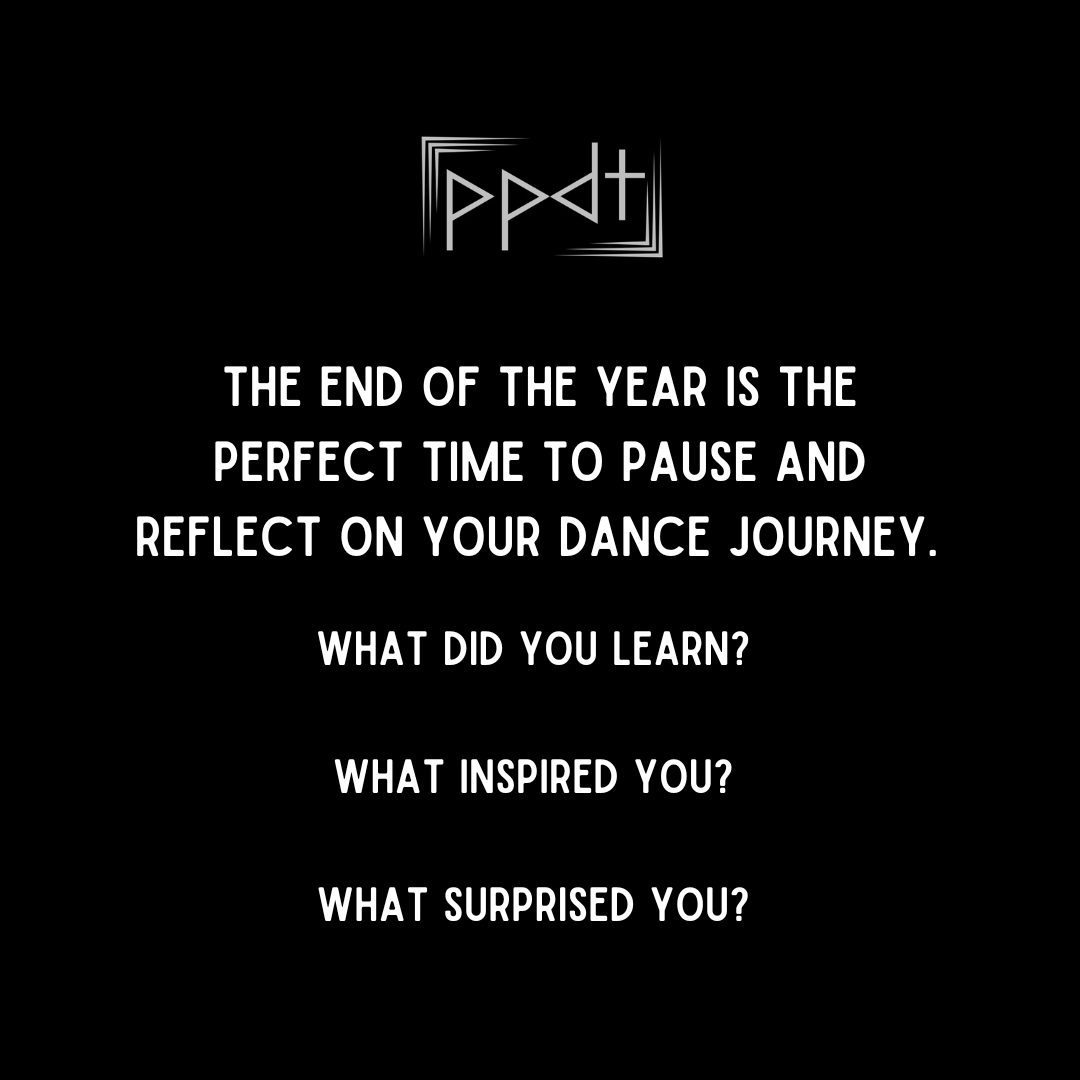
The end of the year (or semester or term) is the perfect time to pause and reflect on your dance journey. What did you learn? What inspired you? What surprised you? These reflections can also help your dance instructors design future classes tailored to their students’ needs and interests.
Staying consistent with at-home dance practice can be a challenge. Not only is there no teacher present to guide and prompt your steps, but there is also nobody checking to see what is right or wrong with those steps.
While practicing dance at home can be a challenge, it is not impossible, and I have a few tips that can help make it easier to develop your routine. For the most part, I will structure my at-home practice as if it were an in-person class, but I can tailor the exercises to meet my needs for that day.
You can join me in using this repeatable recipe for every dance practice session:
Warmup
Technique practice
Choreography or Improv
Stretch
Log my notes
One reason I like having a standard list to turn to is that I have a reference of options to choose from. There may be days when I only have 20 minutes to practice, or may only be practicing for the sake of running through choreography. There have been many times when I just jump in to practice and do the thing, but I’ve learned that on the fly means I would be leaving off some of the important parts.
Warmup
Warming up is one of the most important parts of your dance practice. With a proper warmup for dance practice, you will be less likely to experience injury and soreness. An ideal warmup includes moving all parts of the body, and light stretching with a focus on preparing for the technique and choreography for the day.
Technique practice
Practicing techniques may look different depending on which style of dance you are working on. For ballet, for example, technique practice may look like a full barre or a series of targeted barre drills. If you are a ballroom dancer, you may take to the bar or wall to practice the feeling of resistance you may have with a partner. When it comes to practicing dance techniques on your own without a dance teacher, it can help to focus on repeating and solidifying what you have already learned, rather than trying to get ahead.
Choosing which technique to focus on will relate to either what you’re working on in class, personal goals you say, or even both.
Choreography or Improv
You may not always have a routine or choreography to practice, depending on your dance goals. Choreography run-throughs of whatever I may be working on at the time, and if not, I will throw some improv into the mix. The reason for this is that mentally, practicing technique and drills translates to dance moves.
Stretch
I already mentioned warming up as a necessary part of a dance practice session. Stretching is also important. While I do include stretching as a part of the warmup, I also like to add additional stretching after I have been moving. This also makes for a great cool-down after practice or class.
Log your dance notes
At the end of the practice session, I log my notes into my dance diary. This allows me to reflect on any challenges, or celebrate successes, and I can also see how consistent I am in showing up.
While each dance practice session will differ in the specific tasks and details, keeping a broad outline of what to include in your practice can help with the planning.
Dancing is just as much of a mental sport as it is a physical one. It takes courage and confidence for anyone to attempt a step first, and self-doubt is a common enemy for many. This doubt usually comes from my feeling that my dancing might not fit in with professional expectations. One practice I use to combat this perpetual self-doubt is reflexivity.
In social science, reflexivity refers to a process of questioning and reflecting on cultural norms. While there may be cultural norms in the dance world, we are all individual dancers. The benefit of incorporating regular reflection into your dance practice is that you can notice and understand which thoughts or stories may be holding you back from dancing confidently. When I am consistent with my reflecting practice, I feel much more accepting of myself as a unique dancer and more respectful of the history and tradition we are all a part of, even in our uniqueness.
Planning and journaling are two of the simplest ways to practice reflexivity. You’ll just need a place to put your thoughts. Your reflection space may be a blank notebook, digital notepad, post-its, or whatever media you desire for your archive. There are also many customized options made by dancers like myself for tracking and reflecting on your dance practice. You may need to try a few different journaling styles before you find what works for you, which is just another chance to reflect! I use a combination of written logs and journaling in my dance practice.
Every dancer has their own unique body and soul, and a reflexive approach to dancing allows you to be fluid in developing your dance skills to your personal needs. As an anthropologist, I think it is essential for the people experiencing cultural moments to reflect on them. Your journals and dance logs will become part of the collective memory of dance. There are so many ways we can preserve dance for the future, and leaving an archive of personal reflections is one of them.
Looking for more? Check out our Year of Dance Journal Prompts. This dance reflection resource includes 12 prompts to guide dancers through a year of dance reflection.
Choreography is a captivating art form that allows you to express yourself through movement, tell stories, and create visually stunning performances. If you’re a new choreographer looking to make your mark in the dance world, here are seven essential tips to help you succeed:
1-Study Different Styles
To become a versatile choreographer, immerse yourself in various dance styles. Learn the basics of ballet, contemporary, hip-hop, jazz, and other genres. This diverse knowledge will enable you to blend styles creatively and stand out in the industry.
2-Seek Inspiration Everywhere
Inspiration can strike at any moment. Be open to new experiences, cultures, and art forms. Watch dance performances, attend art exhibitions, or travel to unfamiliar places. These experiences can provide fresh ideas and perspectives for your choreography.
3-Collaborate with Diverse Artists
Collaboration is key to choreographic success. Work with dancers from different backgrounds and skill levels, as well as musicians, costume designers, and lighting technicians. Diverse input can lead to unique and groundbreaking creations.
4-Choreograph to Music
Choose music that resonates with your vision. Listen to the lyrics, melody, and rhythm, and allow them to influence your choreography. A strong connection between music and movement can enhance the emotional impact of your piece.
5-Plan and Organize
Choreographing a dance piece requires careful planning and organization. Create a clear vision for your piece, outline your ideas, and develop a timeline. Efficient organization ensures that you stay on track and meet deadlines.
6-Embrace Failure and Adapt
Not every idea will work perfectly. Be open to experimentation and willing to revise your choreography if necessary. Learning from your mistakes and adapting your work will help you grow as a choreographer.
7-Seek Feedback and Learn Continuously
Share your work in progress with trusted peers, mentors, and dancers. Constructive feedback can help you refine your choreography and improve your skills. Attend workshops, take classes, and stay up-to-date with dance trends to continue learning and evolving as a choreographer.
In the world of choreography, creativity knows no bounds. Remember that every great choreographer started with a passion for movement and a willingness to explore. With dedication, perseverance, and a commitment to self-improvement, you can craft compelling dance pieces that leave a lasting impact on audiences and the dance community.
Ready to get started with your next choreography project? You can find useful resources like the Choreography Planning and Design Worksheet in the People Play Dance Theatre shop.



 People Play Dance Theatre