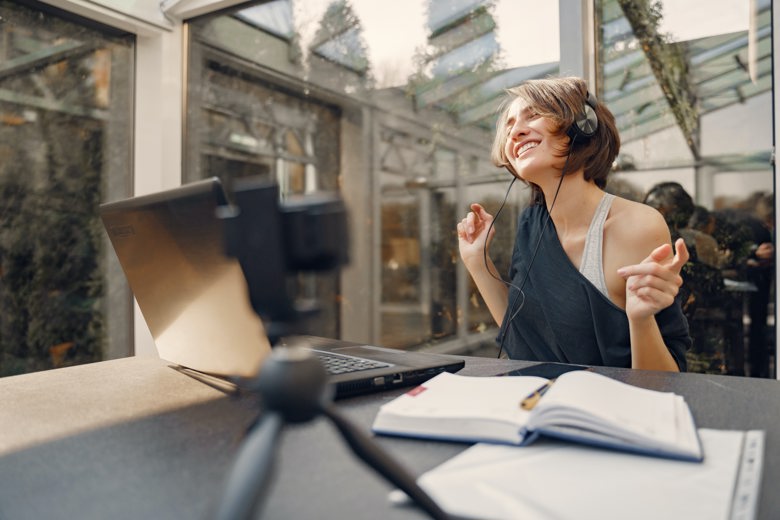
Tag: dancing

  • Call for Submissions: Playspaces Virtual Variety Show

    People Play Dance Theatre invites movers, dancers, and performance makers to submit short works for Playspaces, a virtual variety show.

    We’re seeking original movement-based works created and filmed in non-traditional spaces. This could be a hotel room, a stairwell, a rooftop, a garden, a parking lot. For this production, the location is as much a part of the piece as the performer.

    Event Details

    Live Premiere: November 7, 2025 on the People Play Dance Theater YouTube channel


    After the premiere: The full program will remain available for replay.Submission Guidelines

    Who Can Apply:

    Dancers, movers, physical theater artists, interdisciplinary performers. Individual and group performances will be considered. Please submit a separate form for each submission. 

    What We’re Looking For:

    Original works filmed in non-traditional spaces
    Strong use of movement and location
    Clarity of concept and creative camera framing

    Technical Specs:

    Video format: MP4 or MOV, 1080p minimum

    Landscape orientation

    Sound: Original score, royalty-free, or live natural sound preferred. 

    Length: 2–7 minutes

    How to Submit:Complete this Google Form with your file upload and details. 

    Deadline: Deadline for submissions is October 17, 5:00pm pst. 

    Please email  PeoplePlayDance@gmail.com with any questions. 

  • Reflecting on Your Dance Practice

    Dancing is just as much of a mental sport as it is a physical one. It takes courage and confidence for anyone to attempt a step first, and self-doubt is a common enemy for many. This doubt usually comes from my feeling that my dancing might not fit in with professional expectations. One practice I use to combat this perpetual self-doubt is reflexivity.

    In social science, reflexivity refers to a process of questioning and reflecting on cultural norms. While there may be cultural norms in the dance world, we are all individual dancers. The benefit of incorporating regular reflection into your dance practice is that you can notice and understand which thoughts or stories may be holding you back from dancing confidently. When I am consistent with my reflecting practice, I feel much more accepting of myself as a unique dancer and more respectful of the history and tradition we are all a part of, even in our uniqueness.

    Planning and journaling are two of the simplest ways to practice reflexivity. You’ll just need a place to put your thoughts. Your reflection space may be a blank notebook, digital notepad, post-its, or whatever media you desire for your archive. There are also many customized options made by dancers like myself for tracking and reflecting on your dance practice. You may need to try a few different journaling styles before you find what works for you, which is just another chance to reflect! I use a combination of written logs and journaling in my dance practice.

    Every dancer has their own unique body and soul, and a reflexive approach to dancing allows you to be fluid in developing your dance skills to your personal needs. As an anthropologist, I think it is essential for the people experiencing cultural moments to reflect on them. Your journals and dance logs will become part of the collective memory of dance. There are so many ways we can preserve dance for the future, and leaving an archive of personal reflections is one of them.

    Looking for more? Check out our Year of Dance Journal Prompts. This dance reflection resource includes 12 prompts to guide dancers through a year of dance reflection.

  • Level Up Your Home Dance Space

    Dancing at home is a great way to supplement your in-person practice, and even learn a few new steps. The problem is, that it’s not always easy to find the right space to dance at home.

    This post will take you through the ideal, set up for an at-home dance studio, and share some alternatives for what you can do when the ideal isn’t available.

    Full Range of Motion

    First and foremost, you need space to move in! This is unfortunately one of the hardest things to come by depending on your living arrangement and practicing in too confined of a space can have a negative impact on your range of motion. A garage space or lawn can be great alternatives if you don’t have enough room indoors.

    A Good Foundation

    Floors are one of the most important things for dancers to pay mind to. Unfortunately, most homes were not built with dance training in mind, and I would especially recommend against practicing on tile or concrete for prolonged periods. Fortunately, there are many options on the internet for portable dance flooring that can be used in small spaces. I have had much success in the past with an area rug in a garage space.

    Meet me at the Barre

    One of the greatest things you will ever bring into your home dance space is a solid barre. There are many portable options available online, or you can also make your own. I made my own glow-in-the-dark galaxy barre using a design I found online. Both options can be pricey, but there are also many household hacks that work too. I won’t be the first to tell you about how great the kitchen counter is as a barre.

    Look at Yourself

    Mirrors are essential for checking your alignment and body positions while dancing. Ideally, your mirror will be full length, but you may also find that multiple smaller mirrors at different angles work better for your space. I have also used my phone camera as a last resort when I’ve lived in apartments with no mirrors.

    Feel the Beat

    Every dancer has their own preference on how to set up their music and media. My biggest recommendation is that whatever you use, make sure you’ve got a designated raised-up space that keeps your devices off the dance floor. I have a tiered shelf that I like to use because I can keep my sound statin on top, and organize some extra accessories so I have more floor space to use.

    Check out this video to learn more!