Catch our upcoming virtual variety show on November 7 at 4 PM PST!
Playspaces is a virtual variety show produced by People Play Dance Theatre, celebrating movement in unconventional spaces. Each featured work was created or filmed outside traditional stage spaces. The artists of Playspaces explore how physical expression transforms ordinary environments into sites of imagination. Each piece reveals the human body’s ability to play, adapt, and create meaning wherever it moves.
People Play Dance Theatre invites movers, dancers, and performance makers to submit short works for Playspaces, a virtual variety show.
We’re seeking original movement-based works created and filmed in non-traditional spaces. This could be a hotel room, a stairwell, a rooftop, a garden, a parking lot. For this production, the location is as much a part of the piece as the performer.
After the premiere: The full program will remain available for replay.Submission Guidelines
Who Can Apply:
Dancers, movers, physical theater artists, interdisciplinary performers. Individual and group performances will be considered. Please submit a separate form for each submission.
What We’re Looking For:
Original works filmed in non-traditional spaces Strong use of movement and location Clarity of concept and creative camera framing
Technical Specs:
Video format: MP4 or MOV, 1080p minimum
Landscape orientation
Sound: Original score, royalty-free, or live natural sound preferred.
For performers and artists, imposter syndrome can feel like an unwelcome shadow, lingering just behind moments of success or creativity. This ever-lurking shadow whispers doubts into the quiet spaces of your mind:
“You don’t belong here.”
“You’re not talented enough.”
“What if they find out you’re a fraud?”
If these thoughts sound familiar, know this: you are not alone.
Imposter syndrome thrives in the hearts of high achievers, particularly in industries where subjective opinions often shape how we measure success. However, it is not an insurmountable barrier. Here’s how you can begin to overcome it:
1. Redefine Success
Success in the arts is not a straight line. It’s a winding journey marked by growth, experimentation, and connection. Celebrate personal milestones instead of focusing on external accolades such as applause, awards, or social media followers. Your milestones may be something like mastering a new technique, completing a challenging project, or simply showing up for your art on the hard days.
2. Embrace Vulnerability
Artistry is inherently vulnerable. Every performance and every creation is a piece of you offered to the world. Imposter syndrome thrives in the fear of being seen, but what if being seen is the point? Lean into your vulnerability; it’s where your authenticity lives. And authenticity, more than perfection, is what audiences and collaborators connect with.
3. Challenge your Inner Critic
Your inner critic may be loud, but they are not always truthful. When it says you’re not good enough, ask yourself: “Is this fact or fear?” Collect evidence of your competence, whether it be positive feedback, moments of pride, or the reminder that someone asked you to show up and share your work.
Over time, repeating this practice can help reframe the narrative.
4. Remember That You’re Not Alone
Even the most seasoned professionals experience moments of doubt. Meryl Streep has spoken about feeling like a fraud. Maya Angelou admitted to worrying that she’d be “found out” despite her unparalleled literary achievements. These icons remind us that imposter syndrome doesn’t invalidate our worth; it’s a sign that we care deeply about what we do.
5. Build a Support Network
Surround yourself with people who uplift and inspire you. These people could be mentors, peers, and friends who remind you of your value. Share your feelings with them; often, simply voicing your doubts can diminish their power.
6. Create for the Love of It
Remember why you started. Whether it’s the joy of storytelling, the thrill of live performance, or the freedom of creative expression, reconnecting with your “why” can ground you. When you focus on the act of creating rather than the validation it might bring, the weight of imposter syndrome lessens.
7. Reframe Failure as Growth
Fear of failure often fuels imposter syndrome.
Remember, failure is not the end of the art, it’s a tool for growth. Every misstep is an opportunity to learn and improve. Allow yourself the grace to stumble, knowing that growth often comes from the moments that challenge you most.
You Belong Here
Your voice, movement, and vision matter as a performer or artist. The world needs your unique perspective. Being human means you inherently have the ability to reflect humanity, evoke emotion, and spark change. Imposter syndrome is not a sign that you don’t belong; it’s often a sign that you’re pushing boundaries and stepping into spaces that demand your courage.
So take a deep breath, step into the spotlight, and trust in the power of your artistry. You are enough, just as you are.
It’s tempting to say “yes” to every opportunity that comes your way—after all, every gig seems like a step forward in your career, or another chance for fun. But here’s the hard truth: taking on too much can backfire, both professionally and personally.
In my experience, dancers who overcommit can end up in situations where they either have to flake out or underdeliver, leaving behind frustrated choreographers, directors, or collaborators. That kind of reputation can ruin future opportunities faster than you think.
Before you commit to a project, take a step back and ask yourself:
Do I truly have the time in my schedule to give this my best effort?
Do I have the skills or stamina to meet the expectations of this role?
Will this opportunity align with my long-term goals as a dancer
Am I truly willing to show up for this opportunity?
Setting boundaries isn’t about saying no to everything—it’s about being intentional with your yes.
Learning to set boundaries will allow you to show up fully prepared, professional, and committed with consideration and respect for the rest of the production team
Don’t be the dancer who agrees to everything and ends up quitting halfway through. Be the dancer who knows their limits, sets boundaries, and builds a reliable, professional reputation you can be proud of.
Reflection is a powerful tool for growth, especially in dance. Reflecting on your experiences can deepen your understanding of the skills, techniques, and creativity explored in the dance studio. It’s an opportunity to celebrate your progress, acknowledge challenges, and consider how to use what you’ve learned moving forward.
The end of the year (or semester or term) is the perfect time to pause and reflect on your dance journey. What did you learn? What inspired you? What surprised you? These reflections can also help your dance instructors design future classes tailored to their students’ needs and interests.
Improvisation in dance is usually referring to spontaneous or semi-structured movements. Rather than learning choreography as a specific sequence of known steps to match key points in the music, the moves are completely random or prompted by a simple word or phrase.
With improvisation in dance, the goal is not so much to be interesting but to be interested. It is more about presence than performance. The number of steps a dancer knows has no relation to their ability to create movement and dance on the spot when it comes down to improvisation skills. Dancers can learn new steps, but improvisation is an experience in presence.
In theory, improvisation is simple. Make up the movement as you go along. In practice, however, many dancers find it hard to make things up on the spot and stay present at the same time.
A great way to incorporate more presence into your dance practice is to play improvisation prompt games. If you are playing with a group of dancers, you can take the responsibility to call out a movement dynamic, color, or phrase, and dancers use that to inspire their movement.
If you are working alone, you can still provide yourself with a sense of spontaneity, but it might take more planning. For example, you can create a list of prompts to pull from, or even write out prompts on slips of paper and pull them out of a hat.
One benefit of using prompts in improvisation is that it removes the mental work of recollection and creates more space for presence.
We are thrilled to announce that our short dance film, Danza Innamorati, has received an Honorable Mention at the Athens International Monthly Art Film Festival!
This recognition is a celebration of the incredible talent and dedication of our team, and it reinforces our commitment to creating meaningful opportunities for artists to shine.
Thank you to all who have supported this project—we couldn’t have done it without you! Stay tuned for more updates and opportunities!
This pool is open to all artists in and around Orange County, California. If you are not local to this area, please stay tuned for virtual opportunities.
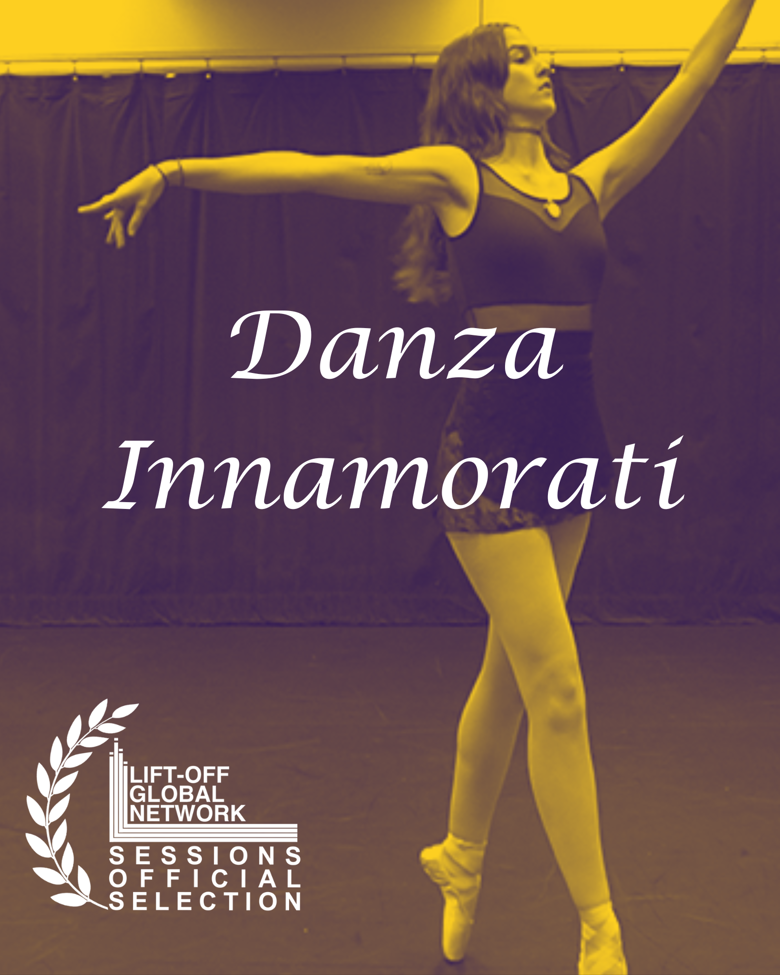
We are excited to announce that our short dance film, Danza Innamorati has been selected to be screened in the Lift-off Sessions July 2024, a monthly online showcase for indie shorts and features presented by the Lift-off Global Network.
More info on how to watch and support coming soon!







 People Play Dance Theatre